
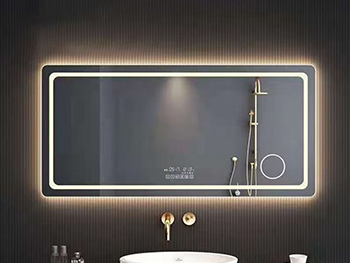
Fully Automatic Smart Bathroom Mirrors with Automated Defogging System: Technology and Market Insights
Industry Background and Market Demand
The bathroom mirror industry has evolved significantly with the integration of smart technology. Traditional mirrors, prone to fogging after showers, have long been a source of inconvenience. The demand for fully automatic smart mirrors with defogging capabilities has surged, driven by consumer expectations for convenience, energy efficiency, and modern aesthetics.
According to market research, the global smart mirror market is projected to grow at a CAGR of 7.5% from 2023 to 2030, with bathroom applications accounting for a substantial share. Hotels, luxury residences, and healthcare facilities are early adopters, valuing hygiene, automation, and user experience. The automated defogging feature eliminates manual wiping, reducing maintenance while improving functionality.
Core Technology: How Automated Defogging Works
The defogging mechanism in smart mirrors relies on thermal regulation or electrically conductive coatings to prevent condensation. Two primary methods dominate the industry:
1. Heated Backplate Technology – A thin heating element (often a resistive wire or film) is embedded behind the mirror glass. When activated, it raises the surface temperature slightly above the dew point, preventing fog formation.
2. Conductive Coating (Transparent Heating Layer) – A transparent, conductive layer (e.g., indium tin oxide or graphene) is applied to the glass. When powered, it generates uniform heat without obstructing visibility.
Advanced models integrate humidity sensors and motion detection to activate defogging only when needed, optimizing energy consumption. Some systems also feature touchless controls, allowing users to adjust settings via voice commands or smartphone apps.
Product Structure, Materials, and Manufacturing
A high-performance smart bathroom mirror consists of multiple layers:
- Tempered Glass (5–6mm thickness) – Ensures durability and safety, meeting international impact resistance standards.
- Anti-Reflective and Water-Repellent Coatings – Minimize glare and facilitate easy cleaning.
- Heating Element Integration – Precision lamination ensures even heat distribution without hot spots.
- Frame Materials (Aluminum, Stainless Steel, or Waterproof Polymers) – Corrosion-resistant designs for humid environments.
- Embedded Electronics (Control Module, Sensors, and Connectivity Options) – Enables automation and smart home integration.
Manufacturing involves CNC glass cutting, vacuum lamination, and rigorous quality testing to ensure moisture resistance and electrical safety. Mirrors designed for commercial use often undergo IP65 or higher certification to withstand high humidity.
Key Factors Affecting Performance and Quality
1. Heating Uniformity – Poorly distributed heating leads to partial defogging. High-quality mirrors use precision-engineered heating grids.
2. Energy Efficiency – Smart activation algorithms reduce power consumption by 30–50% compared to continuous heating.
3. Durability in Humid Environments – Sealed electronics and corrosion-resistant materials prevent long-term degradation.
4. Response Time – Premium models achieve full defogging within 30–60 seconds, while budget options may take longer.
Supplier Selection Criteria for OEMs and Integrators
When sourcing smart bathroom mirrors, B2B buyers should evaluate:
- Compliance with Safety Standards (CE, UL, RoHS) – Ensures electrical safety and environmental compliance.
- Customization Capabilities (Size, Shape, and Additional Features like LED Lighting) – Flexibility for different project requirements.
- Supply Chain Reliability – Lead times, production capacity, and after-sales support.
- Technical Support and Warranty – Manufacturers offering firmware updates and extended warranties are preferable.
Common Challenges and Industry Pain Points
- Power Consumption Concerns – Some early-generation models consume excessive energy, deterring eco-conscious buyers.
- Installation Complexity – Hardwired models require professional electricians, increasing deployment costs.
- Sensor Accuracy Issues – Low-cost humidity sensors may trigger false defogging cycles.
- Maintenance of Smart Features – Firmware bugs or connectivity drops can disrupt functionality.
Applications and Use Cases
- Luxury Residences – Homeowners prioritize aesthetics and automation, integrating mirrors with smart home systems.
- Hotels and Spas – Automated defogging enhances guest experience while reducing housekeeping efforts.
- Healthcare Facilities – Hygienic, touchless operation is critical in hospitals and clinics.
- Marine and RV Bathrooms – Compact, energy-efficient models are ideal for mobile living spaces.
Current Trends and Future Developments
1. AI-Driven Predictive Defogging – Future models may use machine learning to predict fogging based on usage patterns.
2. Solar-Powered Options – Integrating photovoltaic layers for off-grid applications.
3. Modular Designs – Swappable smart modules (e.g., adding Bluetooth speakers or air quality sensors).
4. Sustainable Manufacturing – Increased use of recycled materials and low-energy production techniques.
FAQ: Common Questions About Smart Defogging Mirrors
Q: How much power does an automated defogging mirror consume?
A: Energy-efficient models use 50–100W during operation, typically running for 10–15 minutes per cycle.
Q: Can these mirrors be installed in existing bathrooms?
A: Yes, but hardwired models require electrical wiring. Plug-in or battery-operated alternatives are available.
Q: Do heated mirrors interfere with LED lighting?
A: No—modern designs isolate heating elements from lighting circuits to prevent interference.
Q: What is the lifespan of a smart defogging mirror?
A: High-quality units last 8–12 years, depending on usage and environmental conditions.
Conclusion
Fully automatic smart bathroom mirrors with defogging systems represent a convergence of convenience, technology, and design. As demand grows, manufacturers must balance performance, energy efficiency, and durability to meet both residential and commercial needs. With advancements in materials and IoT integration, the next generation of smart mirrors will further redefine bathroom functionality.
Ce site Web utilise des cookies pour vous garantir la meilleure expérience sur notre site Web.


 English
 Español
 日本語
日本語 العربية



 Téléphone
Commentaire
(0)