
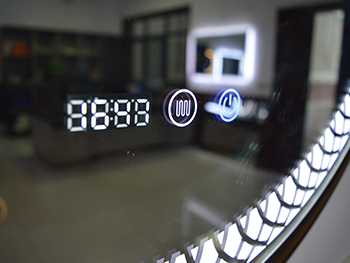
Smart Mirrors with Touch and Gesture Control: The Future of Interactive Home Technology
Introduction to Smart Mirrors
Smart mirrors represent one of the most exciting developments in home technology, combining the traditional functionality of mirrors with advanced digital capabilities. These innovative devices integrate display technology, touch sensors, and gesture recognition to create an interactive experience that goes far beyond simple reflection. As the Internet of Things (IoT) continues to expand, smart mirrors are emerging as central hubs for smart homes, offering users a seamless blend of utility, information, and entertainment.
The concept of a smart mirror builds upon the idea that mirrors are natural focal points in our daily routines. We instinctively look at mirrors when we wake up, prepare for our day, and return home in the evening. By enhancing this everyday object with intelligent features, manufacturers have created a product that feels both futuristic and immediately familiar.
Core Technologies Behind Smart Mirrors
Display Integration
At the heart of every smart mirror is its display technology. Most smart mirrors use either LCD or OLED panels placed behind two-way mirrors. This configuration allows the mirror to function normally when the display is off while enabling digital content to appear when activated. The transparency of the mirror surface can be adjusted to optimize both reflection quality and display visibility.
Advanced models incorporate edge-to-edge displays with high resolution (often 4K or higher) to ensure sharp, vibrant visuals. Some premium versions even feature flexible or curved displays that can conform to various mirror shapes and sizes, expanding design possibilities for different home environments.
Touch Control Systems
Touch capability transforms the mirror from a passive surface into an interactive interface. Most smart mirrors employ either capacitive or infrared touch technology:
- Capacitive touch works similarly to smartphone screens, detecting the electrical properties of human touch. This method offers excellent precision and multi-touch support but requires direct contact with the surface.
- Infrared touch uses an invisible grid of infrared beams across the mirror surface. When interrupted by a finger or stylus, the system detects the touch location. This approach works even with gloves and doesn't require the conductive properties of capacitive systems.
The touch interface enables users to swipe through menus, adjust settings, select apps, and interact with content just as they would with a tablet or smartphone, but on a much larger scale.
Gesture Recognition Technology
Gesture control adds another dimension of interaction, allowing users to command the mirror without physical contact. This feature proves particularly useful when hands are wet, dirty, or occupied. Current gesture recognition systems in smart mirrors typically use:
1. Time-of-flight (ToF) sensors that measure how long it takes infrared light to bounce back from objects, creating depth maps of the space in front of the mirror.
2. Structured light systems that project patterns and analyze their deformation to interpret hand movements.
3. Camera-based solutions with computer vision algorithms that track hand positions and motions.
These systems can recognize a variety of gestures—swipes, pinches, waves, and more—that users can customize for different functions like adjusting brightness, skipping music tracks, or dismissing notifications.
Key Features and Functionalities
Personalized Information Display
One of the primary advantages of smart mirrors is their ability to show relevant information at a glance. Users can configure their mirrors to display:
- Weather forecasts with current conditions and extended outlooks
- Calendar events and reminders for the day ahead
- News headlines from selected sources
- Traffic updates for commute planning
- Health metrics from connected wearables (steps, heart rate, sleep data)
This information typically appears in customizable widgets that users can arrange according to their preferences, creating a personalized dashboard that updates throughout the day.
Smart Home Integration
As central control points in connected homes, smart mirrors can interface with various IoT devices:
- Lighting control: Adjust brightness, color temperature, or turn lights on/off in different rooms
- Thermostat management: View and modify temperature settings
- Security monitoring: Check live feeds from connected cameras
- Appliance control: Start coffee makers, preheat ovens, or activate robot vacuums
Advanced models support multiple smart home protocols (Wi-Fi, Zigbee, Z-Wave, Bluetooth) to ensure compatibility with diverse ecosystems.
Health and Beauty Applications
Smart mirrors excel in personal care applications:
- Skin analysis: Using high-resolution cameras and specialized lighting, some mirrors can assess skin condition, track changes over time, and recommend products or routines.
- Virtual try-on: Augmented reality allows users to experiment with different makeup looks, hairstyles, or even glasses before making purchases.
- Posture monitoring: By analyzing the user's reflection, the mirror can provide feedback on standing or sitting posture.
- Fitness guidance: Display workout routines, track exercise form, or connect with fitness apps and equipment.
Entertainment and Communication
Modern smart mirrors serve as entertainment centers:
- Media playback: Stream music, podcasts, or videos while getting ready
- Video calling: Integrated cameras enable high-quality video chats with framing assistance to keep users centered
- Social media integration: View and interact with social feeds (with privacy controls)
- Gaming: Some models support casual games or interactive experiences
Design Considerations and Customization
Aesthetic Integration
Successful smart mirror designs balance technology with aesthetics to ensure they complement rather than disrupt home decor. Key design aspects include:
- Frame options: From minimalist bezel-free designs to ornate traditional frames that conceal technology
- Size variations: Compact models for bathrooms to full-length versions for bedrooms or entryways
- Finish choices: Various mirror tints and reflectivity levels to match different environments
- Modular components: Some systems allow users to upgrade or replace individual elements (display, computer module, etc.)
User Interface Design
The UI of smart mirrors must account for:
- Viewing distance: Larger touch targets and text than mobile devices
- Lighting conditions: Automatic brightness adjustment and high-contrast modes for different environments
- Context awareness: Showing relevant information based on time of day, location, or detected user
- Privacy controls: Easy ways to disable cameras or microphones when desired
Installation and Placement
Smart mirrors require careful consideration of:
- Power requirements: Most need continuous power, though some incorporate battery backups
- Mounting options: Wall-mounted, freestanding, or built-into furniture
- Environmental factors: Humidity resistance for bathroom models, glare reduction for well-lit areas
- Viewing angles: Ensuring the display remains visible from typical user positions
Technical Challenges and Solutions
Power Efficiency
Maintaining an always-ready mirror display presents power management challenges. Solutions include:
- Low-power modes that keep basic functions active while conserving energy
- Motion activation to wake the display when users approach
- Efficient processors optimized for mirror applications
- Ambient light sensors that adjust brightness to conserve power
Privacy and Security
As connected devices with cameras and microphones, smart mirrors raise valid privacy concerns. Manufacturers address these through:
- Physical camera covers or indicator lights
- Local processing options that don't require cloud connectivity for sensitive functions
- Regular security updates to protect against vulnerabilities
- Clear data policies explaining what information is collected and how it's used
Durability and Maintenance
Smart mirrors must withstand daily use in various environments:
- Water-resistant designs for bathroom installation
- Anti-fog technology to maintain visibility in humid conditions
- Scratch-resistant coatings to protect touch surfaces
- Modular repair options to extend product lifespan
Future Trends and Developments
Advanced AI Integration
Future smart mirrors will likely incorporate more sophisticated artificial intelligence:
- Predictive suggestions based on routine analysis (outfit recommendations, schedule reminders)
- Emotion recognition to gauge mood and adjust lighting/music accordingly
- Natural language processing for more conversational interactions
- Personalized content curation that improves over time
Expanded Health Monitoring
Next-generation mirrors may include:
- Vital sign tracking through non-contact methods
- Sleep quality analysis using advanced sensors
- Nutrition guidance with integrated scale and food recognition
- Mental wellness tools like meditation prompts or stress indicators
Enhanced Augmented Reality
AR capabilities will continue to evolve with:
- 3D body scanning for accurate virtual clothing try-ons
- Interactive tutorials for beauty, fitness, or home repair
- Real-time translation of text or speech in the reflection
- Environmental augmentation that alters how spaces appear (virtual decor changes)
Sustainable Design
Eco-conscious development will focus on:
- Energy harvesting from ambient light or user motion
- Recyclable materials in construction
- Longevity features to reduce e-waste
- Low-power displays with improved efficiency
Conclusion
Smart mirrors with touch and gesture control represent a significant leap forward in how we interact with technology in personal spaces. By combining essential functionality with advanced features, these devices seamlessly integrate into daily routines while offering unprecedented convenience and customization. As the technology matures, smart mirrors will likely become as ubiquitous in homes as smartphones are today, serving as both practical tools and stylish centerpieces that bridge the physical and digital worlds.
The continued development of display technologies, touch interfaces, gesture recognition, and AI will further enhance smart mirror capabilities, making them even more intuitive and indispensable. With careful attention to design, privacy, and user experience, smart mirrors have the potential to redefine our relationship with both mirrors and technology, creating a future where our reflections become gateways to a smarter, more connected lifestyle.
Ce site Web utilise des cookies pour vous garantir la meilleure expérience sur notre site Web.


 English
 Español
 日本語
日本語 العربية



 Téléphone
Commentaire
(0)